Archive | Swedish RSS feed for this section

Turkey Meatballs with Mushroom Sauce

16 Sep

Turkey meatball with wheat and mushroom strog

A trip to the supermarket isn’t complete without remortgaging your house. Whereas in the UK, the fierce competition between the supermarkets means you get inundated with special offers, 3 for 2s, bogofs and reap the rewards from loyalty schemes, Sweden just plucks a price for each item out of thin air and then doubles it. And then adds a tonne of tax. For the first month or so I was overwhelmed by the language barrier and a bit naïve about the exchange rate with the result that each bag of food seemed to cost around 30 pounds. Since then, I’ve been far more careful and have cut out expensive items such as meat from my shopping list and instead filled my basket with vegetables and keep things interesting by regularly visiting the fish monger. As a result my bags are now weighing in at 20 pounds and I am feeling a lot healthier to boot.

Whilst exploring the exotic frozen meet section in my local supermarket, amongst the crocodile meat, marrow bones and deer blood, I came across a rather boring, but cheap, giant frozen turkey breast and started thinking of ways to pep up this dull lump of protein.

The first night I lobbed off a couple of chunks and poached them in a stock laced with cardamom, cinnamon and coriander and ladled over a reduced sauce that was supposed to be savoury but turned into butterscotch. Whilst it filled a hole for dinner and lunch the next day, let’s just say it barely deserved the 63 words I’ve just given it.

The worst thing about the meat was the texture. With so little fat it was dry and very tasteless. So the only solution was to mince it and turn this mound of inert poultry into super tasty meatballs. This is an adaptation of a great recipe from Anne’s Food which uses either pork or beef. But I’ve used turkey instead.

Ingredients:

Meatballs:

1 whole turkey breast weighing around a kilo
1 finely sliced onion
1 clove of garlic
White pepper
Salt
Handful of cardamom pods
Sprinkling of cinnamon powder
Sprinkling of all spice
Some oats/breadcrumbs to balance the moisture – use your judgement
1 egg

Sauce:

A dozen sliced button mushrooms
1 shallot
1 clove of garlic
2 tablespoons of crème fraiche
Thyme
Tarragon
Butter
Olive Oil
Salt and pepper

Whole wheat

Method:

Turkey meatball mix

Mince your turkey and add everything in the meatballs ingredients list. Hold back a bit on the spices and make a test meatball which you should fry in a bit of oil. It should cook in about 5-8 minutes. Let it cool and test for seasoning and spicing. Adjust as necessary remembering that you can always add more, but it’s harder to take away!

Turkey meatball sizzling

Form into balls about the size of a golf ball and fry in batches to brown. Transfer to a roasting pan cook in a medium-low oven whilst you plough on with the other aspects.

Boil the wheat and drain, but reserve the starchy water. Keep the wheat warm.

Sautee the mushrooms in butter and oil and season with salt which will draw the moisture out. They should start to turn brown. Then add the onions and garlic and cook until soft but not brown. Then pour in about 300ml of the starchy wheat water and it should cause quite a commotion in the pan. Add a dash of liquid chicken stock and reduce. Add some crème fraiche, tarragon, thyme and seasoning to the sauce which should become quite stroganoffy.

Turkey meatball with wheat and mushroom strog top

Serve the meatballs on a bed of wheat and topped with the mushroom sauce. What is lacks in colour it makes up for in rich, autumnal flavours.

This recipe made around 20 meatballs which was enough for 5 meals. Which made it incredibly good value. The warming spicing completely transformed the bland turkey and leant itself to being paired with quinoa, cous cous or fregula and plenty of hot sauce.

After dipping my toe into the controversial world of Swedish meatballs, I’m looking forward to giving the proper versions a go next. If you’ve got a great recipe for Swedish meatballs that you can share with me I’d love to give it a go.

Arctic Char with Roasted Fennel and Grated Tricolour Carrots

22 Aug

When Cowie was last over in Sweden we had a cracking dinner at a small restaurant and bar called Stearin, in Gothenburg’s trendy Linne district. My beef was delicious, but it was Cowie’s fillet of crispy skinned and soft fleshed röding that really caught our attention. We couldn’t work out what the mystery fish was. We left the restaurant convinced we had eaten trout but then found out via the magic of the interweb that röding is actually arctic char.

Fish Church 2

So when I saw a fillet of röding in the Feskekôrka I snapped it up and made it my mission to recreate the dish. I decided to make good use of an abundance of mulitcoloured carrots which seemed to be behaving like a chameleon as they changed colour to match the pink and purple speckled fish skin. And a stray fennel bulb seemed like a good idea too. As did an orange and a lemon.

Ingredients:

Fillet of Arctic Char
Half a fennel bulb
3 grated carrots
1 orange
1 lemon
1 tablespoon of honey
2 teaspoons of Dijon mustard
Some chopped parsley
Glug of olive oil
Half a red chilli
Salt and pepper

Method:

Roast the fennel in a hot oven with a wedge or two of orange for 30 minutes, or until soft and slightly coloured.

Grate your carrots. I used my MagiMix which took a mere 4 seconds and made me feel like a WI superhero! Dress the carrots with a mixture of olive oil, honey, lemon juice, Dijon mustard, orange zest and finely sliced red chilli. As well as some salt and pepper.

Grated carrots

Season the fish and sear skin side down until the skin is crisp. Then turn over and barely cook. You want the fish to be mooing.

Arrange the plate with the fennel as the foundation and balance the fish on top with the carrots looking like an upturned birds nest on the edge of the plate.

Artic char with grated carrots

It’s a delicious, light summer dish that would work just as well with salmon or trout. The carrots, with their citrus, honey and chilli notes and the sweet, aromatic fennel more than played their part too.

Further reading:

More information about Arctic Char on Chow
Swedish recipe for röding and an interesting Scandinavian food blog

Potato “risotto” with smoked mackerel and horseradish crème fraiche

28 Jul

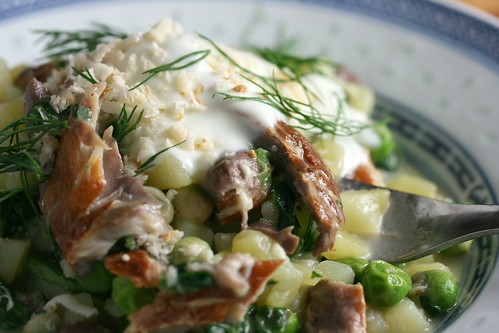
Potato and smoked mackerel risotto

Regular readers will know of my fondness for risottos. What’s not to love about a dish that’s more comforting than a hot water bottle? The only downside is that they have a tendency to be somewhat bad for your waistline. In essence they are the equivalent to the first year you spend at university where it is almost impossible not to put on a stone or two of not very solid fat!

Given that I am trying to eat more healthily and cook with a more Scandinavian mindset, risotto hasn’t really had much of a look in. But when I found myself with a bag full of ageing potatoes that needed cooking I felt as if a compromise might be achieved. Marcus Samuelsson soon came to the rescue with his recipe for potato risotto which I took inspiration from and tweaked with the ingredients that lay expectantly in my fridge.

Ingredients:

I bag of potatoes, peeled and finely diced
2 shallots
1 clove of garlic
½ litre of vegetable stock
100 grams of peas
100 grams of spinach
2 mackerel fillets, torn into pieces
3 tablespoons of crème fraiche
Grated horseradish
Olive oil
Salt
Pepper
Dill
Thyme
Tarragon

Method:

Peel your potatoes. Then finely dice them. This is quite laborious, but sadly, essential.

Sautee the shallot and garlic in olive oil then add the potatoes. Stir for a minute or two and then add hot stock and keep stirring. Add the thyme and tarragon. Then add more chicken stock and continue until the potatoes are tender. Be careful not to overcook. For me it took around 15 minutes.

Add the frozen peas and spinach and let them cook through. Then add 2 tablespoons of crème frache and a knob of butter and stir until the risotto is creamy. Don’t be as aggressive as you would be with rice because you don’t want to mash the potatoes.

Add the smoked mackerel and allow to rest so that the fish warms through. Season and serve with a dollop of crème fraiche on top and some grated horseradish and garnish with dill.

Potato and smoked mackerel risotto close

It was delicious. And for some reason felt healthier than a normal risotto. The combination of potatoes, dill, horseradish and smoked fish was unmistakably Scandinavian. I loved every single mouthful and went to bed dreaming of eating the leftovers for lunch!

Beetroot and Smoked Mackerel Soufflé

25 Jul

My working life is quite unpredictable in Sweden. I never seem to be settled in my flat for longer than a few days before I’m heading off to the airport at 5am or coming back at 11pm. I’m absolutely loving it, but it does make cooking somewhat hard to plan. But when I do get a moment in the kitchen, I find myself treating it as entertainment as much as feeding myself. And given that I am cooking for one I’m finding that posting the recipes on here is my way of sharing my meals, albeit with none of the intimacy or fun!

As a result of being always on the run, I’ve got better at having a few hardy supplies in my kitchen that I rely on. I’m not sure where I’d be without beetroot, a stick of horseradish and a few smoked mackerel fillets in the freezer! They have come to my rescue on many occasions.

When I was researching this recipe I found quite a few people writing about either soufflés made with smoked fish or plain beetroot. The closest thing I discovered to a beetroot and smoked mackerel soufflé was a chilled one made with gelatin. So as far as I know this particular recipe is “original”. But given that nothing ever is and all ideas are simply mashups of existing ideas that doesn’t really count for much anyway. Either way, if you enjoy bright red, light egginess and smoked fish, the chances are you’ll love this.

Ingredients:

3 egg yolks
5 egg whites
25 grams of flour
25 grams of butter
300ml of milk
1 smoked mackerel fillet – mashed
4 beetroot
Some grated horseradish
Goats cheese
Salad
Walnuts
Oil and vinegar
Salt and pepper

Method:

Peel and dice the beetroot and boil till tender. Then whizz in a blender.

Make a roux with the butter and flour. Then add the warmed milk. Stir until it has formed a smooth béchamel. Then add the blended beetroot and the mashed mackerel. Season with pepper and then grate in as much horseradish as suits your palette.

Allow to cool and then when it is warm rather than hot beat in 3 egg yolks.

Then whisk the whites until they reach stiff peaks and fold into the mixture in 3 goes. Be careful not to loose the lightness. So imagine you are Craig Revel Horwood when you are performing this rather effete task.

Beetroot and mackerel souffle mixture

You can then either spoon the raspberry ripple mixture into individual ramekins or load it all into one big oven dish like I did. It just depends on what your style is. I find that my soufflés work better in larger dishes. I’m not sure why.

Beetroot and smoked mackerel souffle in bowl

Bake in a preheated over on a medium heat for 30 minutes or so until the top is looking deep red rather than pink and the texture has taken on a firmer appearance. It should have risen a fair bit as well!

When your soufflé is almost ready whip up a salad with goat’s cheese, walnuts, beetroot tops and dress with a simple oil and dressing combination. Season with salt only once the soufflé is cooked. Add a spoonful of the soufflé to the side of your salad and tuck in.

Beetroot and smoked mackerel souffle plated

The earthy quality of the beetroot complements the smoky flavour of the fish brilliantly and the creamy tang of the goat’s cheese isn’t bad either. The walnuts add texture. But the best bit was the colour. If you hate boringly coloured food as much as I hate “magnolia” coloured walls, then you are in for chromatic overload.

Mushroom Mania – Soufflés and Stuffing

10 Jul

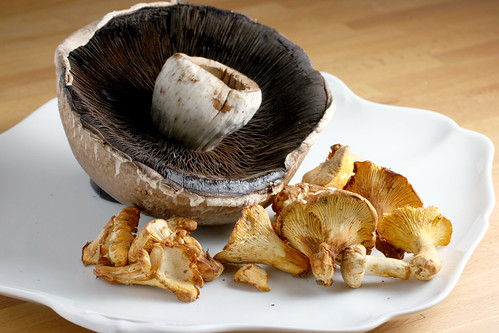
Mushrooms

My local supermarket, in Gothenburg, tempts me every week with their treasure trove of mushrooms. Ranging from field mushrooms the size of dinner plates to what I’ve assumed are golden chanterelles and oriental varieties as well as the more expected button mushroom and a selection of very expensive dried fungi. After 3 months of sniffing, groping and ogling like a lecherous red-faced outcast in a dirty rain raincoat, I gave in.

My mushroom fetish went into over drive and led me into uncharted fungal waters. My mind wouldn’t let go of the thought of stuffing the enormous field mushroom with other mushrooms! In a sort of pseudo-infinite-fungal-regression. With a glut of mushrooms and only one mouth to feed, I spent most of the week inventing new ways to eat mushrooms. Here are the two that are most interesting…

Field mushroom stuffed with chicken liver, chanterelles and goats cheese

Ingredients:

1 massive field mushroom – skinned and destalked
About a dozen interesting small mushrooms such as chanterelles
Butter
Olive oil
3 chopped chicken livers
1 finely chopped shallot
Thyme
2 beaten eggs
1 clove of garlic
Parsley
Goats cheese

Method:

Season your massive mushroom and brush with oil and butter. Then roast for 20 minutes. Meanwhile, sauté the mushrooms in butter until they have browned and released their juice.

Sauted mushrooms

Then add the shallot and garlic and sauté until soft. Remove from the pan and then sauté the chicken livers until rare.

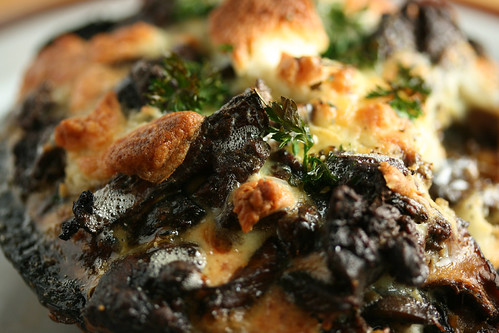
Combine the mushrooms, shallots, garlic, crumbled goats cheese, thyme, beaten eggs and livers in a bowl and then spoon on top of the large mushroom. Season. Then bake for a further 25 minutes at a medium temperature.

Serve as a light lunch. The liver, eggs and double hit of mushroom is a great flavour combination for autumn or a cold summer’s day as you tend to find in Sweden.

I’m not much of a wine expert, but I imagine it would work well with the subtle oaky notes you get in a good white Burgundy or with a piercing New Zealand Sauvignon Blanc to pick up on the acidity of the goats cheese.

Close up mushroom

Mushroom stuffed mushroom

Field mushroom with wild mushroom soufflé

Ingredients:

1 massive field mushroom – skinned and destalked
5 small mushrooms
50 grams butter
50 grams of flour
400ml of milk
1 clove of garlic
4 eggs
Goats cheese
Horseradish
Crème fraiche
Salt and pepper

Method:

Start by poaching the big mushroom in the milk. You may need to weigh the mushroom down as it tends to float! Season with pepper and throw in a chopped clove of garlic. Poach for around 20 minutes until it is soft and the milk has become mushroomy. Remove the mushroom and squeeze to remove the milk. Brush with butter and bake whilst you move on with the rest of the recipe.

Make a roux using the butter and flour. Then after a few minutes of cooking the flour add the hot mushroomy milk. Stir until it has turned into a silky béchamel worthy of featuring in a Dulux ad. Then crumble in some goats cheese.

Meanwhile sauté your smaller mushrooms in butter and oil. (If I had some cognac to hand I would have added a glass at this stage.) Once cooked blend to a pulp and add to the béchamel. Then split your eggs. Add the yolks to the now warm béchamel and whisk the whites to stiffness in a very clean bowl. Fold in the egg whites in three batches.

Remove the large mushroom from the oven and spoon the soufflé mixture into the mushroom’s cavity. Return to the oven and bake on a medium heat for 25 – 30 minutes. Resist the temptation to open the oven!

When the soufflé has risen and is looking golden on top, whip it out and serve with a dollop of horseradish crème fraiche and a sprig of parsley. A salad of goats cheese, walnuts and greenery would also be delicious.

Mushroom stuffe with mushroom souffle

The mushroom soufflé is also great on it’s own. Especially if you make an incision in the top and drizzle in some horseradish cream. Next time I am also going to make some croquetas from the glossy mushroom and goats cheese béchamel. These would be awesome either as tapas to go with a very dry sherry or as an accompaniment to a pork chop or chicken wrapped in parma ham.

Coffee Roasted Duck with Potato, Pear and Artichoke Ragu

22 Jun

Coffee Beans

Swedes are obsessed with coffee. They like it strong. They like it hot. And they like it many times a day. Consequently one of my favourite places in Gothenburg is a coffee shop called Bar Centro which is the hipster dive bar alternative to Starbucks. Their coffee is super strong and unbelievably good. They’ve got me hooked on something they call a 50-50 which is a double espresso super charged with hot milk. It’s a sort of lengthened version of a macchiato but without being as long or frothy as a cappuccino. It’s strong, bitter, sweet and creamy.

So when I saw a recipe for coffee roasted duck in Marcus Samuelsson’s book my eyes lit up and my pulse started racing as if I had just ingested a litre of espresso. The background story to this dish is a confluence of his Ethiopian and Swedish roots. He recalls the smell of his grandmother making coffee from scratch by roasting green coffee beans in a pan that filled their house with an enchanting scent and then layers the Swedish culture for coffee consumption on top of this to create a dish that is very unique. And delicious.

I’ve adapted Marcus Samuelsson’s recipe for both the coffee roasted duck and potato and pear ragu

Ingredients (for one):

Duck

1 duck breast
2 cups of coffee
12 cardamom pods
1 stick of cinnamon
2 handfuls of coffee beans
Cinnamon powder

Potato and pear ragu

1 firm pear
4 small potatoes
3 Jerusalem artichokes
3 tablespoons of crème fraiche
1 endive
Butter
Salt
Pepper
150 mls of chicken stock
Tarragon
Honey

Method

Wake up. Brew the coffee. Pound half of the cardamom pods and add them to the coffee along with the cinnamon. Allow the coffee to cool. Then slash the skin of the duck breast and marinate all day in the fridge.

Return from work and remove the duck from the marinate. It should look similar to the picture below. Pat it dry, sprinkle with salt and return to the fridge with nothing covering it so that the skin dries out.

Coffee duck marinade

Peel and core the pear leaving it in half. Simmer until tender in water with a few cardamom pods, a sprinkling of tarragon and some honey thrown in. You can cook it in red wine but I didn’t have any because of Sweden’s ridiculous licensing laws that mean you can’t buy wine in a supermarket.

Meanwhile boil the potatoes in chicken stock. When they are 8 minutes from being tender add the peeled Jerusalem artichokes. Remove from the heat and drain the potatoes and artichokes, but keep some of the liquor.

Duck cooking in coffee

Now add you duck breast skin side down to a medium-hot frying pan and render the fat out. Shake some cinnamon powder over the underside of the duck. Drain off some duck fat. Then add the coffee beans and cardamom pods and turn up the heat. The kitchen should fill with an intoxicating smell. Once the skin is crisp turn the duck over and the heat down. Add some of the reserved liquor from the potato and artichoke pan and finish the cooking by braising.

Slice the vegetables and then return them to the heat and add the crème fraiche and some more liquor to heat through along with a touch of butter. After five minutes or so add some shredded endive and slices of perfectly poached pear. Season with gusto and add more tarragon.

Discard the coffee beans and cardamom and allow the duck to rest then carve diagonally and serve with the ragu for a very unusual, but utterly delicious dinner.

Coffee duck 1

The combination works brilliantly. The duck was pink and moist with some of the crispiest skin I’ve encountered for a long time. It turns out that duck is tailor made for the bitter aromatic aspects of coffee. And the creamy ragu with the sweetness of pear is the equivalent of adding a tempering dollop of foam on top of an intense espresso. It’s an unusual dish. And I am delighted to have discovered it.

Further reading:

Coffee roasted duck recipe from Marcus Samuelsson
Potato and pear ragu recipe from Marcus Samuelsson
Aquavit and the New Scandinavian Cuisine on Amazon

Smoked Mackerel and Grapefruit Salad

16 Jun

Smoked mackerel and grapefruit salad

I dreamt this recipe up whilst on a run around suburban Gothenburg. I set off in a quandary about what to have for supper, knowing that after a run I would be hungry but not want anything too heavy. I knew I had a grapefruit in the fridge along with a bag of salad and some smoked mackerel. And somehow I landed up with the dish you can see above. And to make matters even better it not only tasted fantastic and was healthy but has also go the thumbs up from my Swedish colleagues!

Ingredients:

I smoked mackerel
½ a grapefruit
6 dessert spoons of crème fraiche
1 avocado
Half a bag of salad
4 teaspoons of caviar
Balsamic vinegar
Olive oil
A dozen mussels (optional)
Scandinavian crisp bread

Method:

Remove the flesh from inside the grapefruit and cut the fruit into segments. Squeeze the juice that is left inside the skin into a bowl but don’t mangle the skin.

Shred the mackerel fillet. Roughly chop your mussels and add. Then mix with the crème fraiche and the grapefruit juice. Stir through 2 teaspoons of caviar. Season with pepper and a touch of salt. Then spoon the mixture into the grapefruit half and top with another teaspoon of caviar.

To make the salad empty the leaves into a salad bowl and dress with olive oil and balsamic vinegar (or you could use the juice from the other half of the grapefruit). Then add the individual grapefruit segments and sliced avocado. Then add another teaspoon of caviar and mix together.

Serve with some crispy Scandinavian bread.

It was just what I wanted. And tasted even better for not only using everything in the fridge but also being healthy. To make it even better you could add some horseradish to the crème fraiche and make the salad a lot more interesting. The combination of acid from the grapefruit and smoky, creaminess of the mackerel turned out to be a great match. It makes for a fun change from the normal squirt of lemon and parsley with smoked mackerel pate. And I felt very intelligent the next day thanks to all the fish oils. Apart from when I sent an email to a client and called them the wrong name!

Smoked mackerel and grapefruit salad dof

When I told Cowie what I’d made, I realised that I am cooking for her even though she’s not here.

Salted Duck with Roasted Sunchoke and Grapefruit Salad

10 Jun

Salted duck and roast sunchoke salad

After the success of curing a chicken breast in brine, I thought I’d try the same thing with duck, with a bit of guidance from a recipe in Marcus Samuelsson’s Scandinavian cookbook, Aquavit.

Duck is one of my favourite things in the whole world. But only if the skin is crisp and salty. Flabby, chewy, greasy flesh gives me the creeps. The salting process helps to keep the flesh moist and leads to the perfect skin.

And when it comes to vegetables, Jerusalem artichokes (or sunchokes as they seem to be called elsewhere) are pretty close to being my favourites as well. They bring back memories of my grandmother’s infamous “Fartichoke Soup” that was so hazardous that every window in the house had to be opened.

I thought about creating an artichoke risotto to accompany the salted duck. But, in light of the warm weather, a hearty salad balancing the sweet, sour and earthy flavours that work so well with duck seemed like a more seasonal option.

Ingredients:

1 duck breast
2 table spoons of salt
5 Jerusalem artichokes
Salad leaves
Half a grapefruit
Olive oil
Pepper
Parmesan

Method:

Make a brine by dissolving the salt in boiling water. Once the water is clear take off the heat and allow to cool. Then once at room temperature place the duck breast in the water and weigh down with a plate. Place in the fridge overnight.

On the evening of your feast, peel the artichokes and boil in well salted water until par cooked which will take 10 minutes or so. Remove and pat dry with paper towel. Then roast in a preheated oven in a trickle of olive oil for 20 minutes. Everywhere else that I have read (apart from Corrigan) has foregone the pre-boil (and you may want to as well), but I found that it created one of my most successful vegetable dishes ever so I’d suggest it’s worth the effort.

Gently render the duck breast in a cast iron frying pan allowing the fat to release. It helps if you’ve scored the skin. Gently turn up the heat and as the amount of fat rendering increases pour this over the artichokes. Once the skin is brown turn the breasts skin side up and pop in the oven for 5 minutes. Remove along with the artichokes and allow everything to rest.

Whilst everything is recovering from being blasted in the oven assemble your salad. Remove the flesh from half a grapefruit and squeeze the juice left in the hemisphere into a glass. You should get a dessert spoon’s worth. Add olive oil to the juice to make a very fresh dressing. Depending on how sharp the grapefruit is you may need a pinch of sugar. Coat the salad in the dressing and add segments of grapefruit along with parmesan shavings. If you’ve got time it might be worth caramelising the fruit for some extra flavour. To do this sprinkle with sugar and place under the grill for a few minutes.

Cut the duck on an angle and arrange the salad. It’s worth keeping the artichokes away from the salad leaves a bit because they will still be quite warm. Season with black pepper and tuck in.

The duck was succulent and blessed with crispy skin. But the stars of the show were the artichokes which were gloriously soft on the inside and perfectly crispy on the outside. They couldn’t have tasted any more of artichoke and brought out the earthy sweetness of the duck. And the grapefruit simply adds a sharpness that brushes any hint of grease to one side.

Happy farting and further reading:

Salt cured duck breast recipe from Marcus Samuelsson
Chocolate & Zucchini on Jerusalem Artichokes
Wikipedia on Jerusalem Artichokes and their potential use as biofuel and their dark days as part of a failed pyramid scheme
Cooking with grapefruit

Creamy Salsify Seafood Tagliatelle

5 Jun

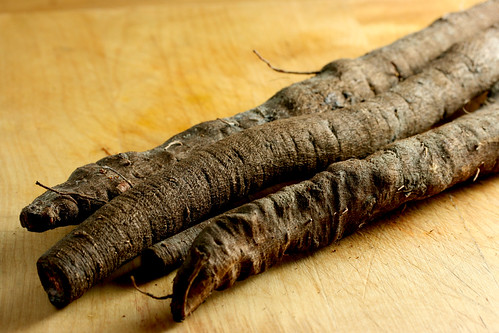
Salsify

Before dining at Kock & Vin I hadn’t really come across salsify before. It made an appearance in few dishes and struck as being a hallmark of Swedish food. So when I saw the gnarly, brown protrusions in the supermarket I couldn’t help myself from placing them in my basket. Even though I had told myself to not buy anything that wasn’t on my very minimalist shopping list.

Some research revealed that salsify is known by many as the oyster plant, apparently because the taste is similar. Looking back at the dish we had at Kock & Vin with braised beef cheek, steak tartar, oysters and salsify it all makes even more sense. And two months after eating this unusual dish I am even more impressed by it.

Braised cheek of beef with steak tartar infused with oysters served with salsify, sauce of oxtail

After much searching, I found a few interesting recipes – one suggesting making them into a truffled mash, another that recommended grating them and making a rosti and most interestingly one in Aquavit that sees them transformed into a root vegetable version of tagliatelle topped with a creamy smoked salmon sauce.

It seemed like a brilliant idea, if harder work than I wanted. I liked the idea of bringing out their oystery characteristics so introduced smoked oysters into the sauce as well and switched the heavy cream for crème fraiche.

Ingredients: (serves 1)

3 stems of salsify
1 small tub of crème fraiche
Several slices of smoked salmon
1 tin of smoked oysters
1 onion
2 cloves of garlic
Caviar
Half a lemon
Basil

Method:

Take the skin off the salsify using a cheese slicer or vegetable peeler. Immediately after peeling place into acidulated water to stop them browning. Then, again using the peeler, slice into wafer thin strands like tagliatelle and place these back into the water. Then for each strand slice lengthways into 3-4mm wide strands and immerse in salted boiling water. Cook for 5 or so minutes or until tender.

Salsify draining

Meanwhile, sauté an onion and the garlic until soft and then add the tub of crème craiche let down with a few tablespoons of water and a squeeze of lemon juice. Then add the smoked oysters to warm through. Once the salsify is cooked remove it from the water and add to the creamy sauce. Rather than grating parmesan over it, some lemon zest will work wonders instead.

Mix through the smoked salmon and a few basil leaves, season generously and top with a teaspoon of caviar.

Salsify tagliatelle with smoked salmon

The fishy flavours, creamy sauce and lemony flecks are delicious. The salsify held itself together very well and makes a brilliant alternative to pasta. And the caviar adds a touch of luxury, texture and a colour contrast to the pale palette.

It would be even better with a glass of cold, minerally Muscadet and maybe a dash of horseradish cream. After such a delicious dish I can imagine the next version evolving into “salsify tagliatelle alle vongole”. If you’ve got any suggestions for cooking salsify please let me know, because I’ve got plenty left in the fridge!

White Asparagus with Dill Hollandaise

30 May

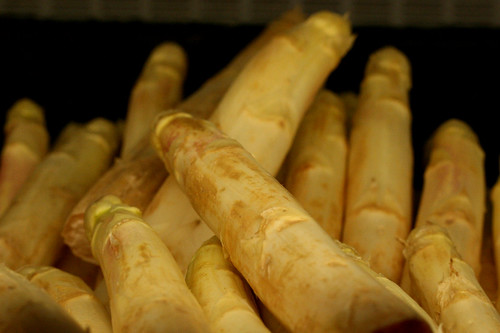
White asparagus 2

18 months ago we planted an asparagus bed at my parents’ house. We spent a full day preparing the soil meticulously to ensure our spidery crowns would have the best chance in life possible. It was the equivalent of sending them off to boarding school and also giving them boaster lessons in French and Spanish. As well as enrolling them in trumpet classes and making them sleep with a paint brush taped to their hand. These asparagus plants wanted for nothing. The only downside is that we will only be able to harvest our first spears in 2012! This will give the crowns enough time to mature and get their strength up so they will continue to be productive for another 20 years. So it’s a price worth paying.

Asparagus is one of my favourite vegetables. But only at the right time of year and when the focus is on the spear and not everything else around them. We’ve had some memorable versions over the last few years. At El Bulli 5 asparagus chunks were served having been cooked for different amounts of time and anointed with different flavourings. Virtually raw asparagus with lemon contrasted perfectly with soft asparagus topped with anchovy butter. At The Hinds Head I had a board of asparagus with hollandaise sauce which I still dream about. It seems then that a fantastic dish of asparagus is likely to linger long in the memory.

All these fond memories derive from the green variety, but I’ve never had white asparagus and wanted to see what the difference was. Whilst stumbling around my new favourite Swedish supermarket, I almost crashed into an iced counter presenting enormous spears of white asparagus. The price tag alone indicated that these were pretty special, so I bought a few spears and rushed home to cook them.

White asparagus is supposed to have a milder flavour than green asparagus and is grown using a process that horticulturalists might call etiolation and everyone else darkness! Essentially by covering the plants in sandy soil and therefore depriving the plants of sunlight the spears turn out white rather than green because of the lack of photosynthesis.

Given their magnificent size and allegedly diluted flavour, I decided to roast them, rather than subject them to boiling water or steam. And for a Swedish touch thought a dill hollandaise would be a good idea…

Ingredients (serves 1)

3 massive white asparagus spears
Melted butter
Oliver oil
Salt
Pepper
Lemon
Dill
Egg yolks

Method:

Brush the asparagus spears in oil and season with salt and pepper. Roast for 20 minutes or until tender. Avoid burning your fingers to the bone like I did, if you possibly can.

In the meantime warm some lemon juice in a glass bowl over a pan of not quite simmering water. Once it has reduced slightly mix in 3 egg yolks. Whisk until frothy. Then add melted butter bit by bit whilst whisking until you are left with a beautiful hollandaise sauce. Once it is the consistency you want chop some dill and add to the sauce which will exude on a alluring perfume that anyone who has been to Scandinavia will instantly recognize.

Serve the spears with a generous dollop of dill hollandaise and tuck in. I found this white asparagus to be more fibrous than the dainty green variety common to late British springtime. But that said the top two thirds of each stem were juicy, sweet and tender with only the base being less than perfect. The dill hollandaise turned out to be a fantastic foil adding a clout of additional taste that the white variety seems to miss out on.

White aspagaus with dill hollandaise

If anyone else has any thoughts on white asparagus as opposed to green, I’d be very interested to hear them – especially if they involved recipes with a Scandinavian slant.