Archive | game RSS feed for this section

Squirrel au Vin

9 Jul

Rad has been putting his air rifle to good use. The irritation of squirrels eating his lovingly nurtured fruit and veg got too much and resulted in me receiving a very unusual text message that read:

“I’ve shot a squirrel! Fancy coming over tonight to help me cook it?”

Feeling a bit like Batman responding to Commissioner Gordon’s urgent phone call, I notified Alfred (AKA Cowie) and jumped into our Batmobile (Peugeot 206) armed with a camera and a few ideas for squirrel recipes.

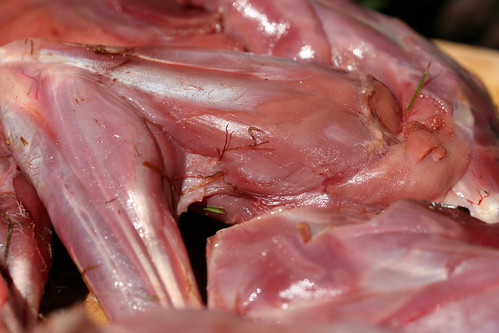
Inspired by Hugh F-W, Rad had skinned the squirrel so all we had to do was butcher the meat and cook it.

The meat was firm, pink and very lean. It smelt fresh had a reassuring dryness. Early summer isn’t an ideal time to eat squirrel because they tend to be young and scrawny. The ideal squirrel is fattened by eating too many acorns and nuts and is far plumper.

Squirrel angle

Squirrel butchery

After our hare experience, we decided that slow cooking was the way forward and opted for a bastardised version of the classic coq au vin.

We fried some bacon, onions, garlic, carrots, mushrooms and celery and added them to a casserole dish.

Then we browned the squirrel meat and deglazed the pan with red wine…

… and poured it all into the casserole.

It bubbled away for several hours before being deemed ready to eat. Sadly, Cowie and I had to return to the Batcave and never got to taste it. Rad thought the flavours overwhelmed the squirrel which is a shame. So next time we might do a squirrel roast and serve it (appropriately) with a cherry sauce as Ollie has suggested on Rad’s blog.

I’m now keen for Rad to shoot a few pigeons so we can make Moroccan Pastilla.

All the amazing square photos are from Rad’s brilliant blog.

Hare Three Ways

2 Jul

When a friend rings you up with the news that he’s shot a hare and it’s got your name on it you don’t mess around. Plans were cancelled, holidays were put on hold and Cowie’s kitchen was annexed for a marathon hare cook off.

Rad had shot the hare in Angelsey with his new air rifle and prepared the beast with the help of Nick who knows everything there is to know about country pursuits. It was huge. I hadn’t braced myself for how large it was going to be. We spread it out and inspected it meticulously, marvelling at the tightness and definition of the muscles. The flesh was firm, almost hard to the touch.

We decided to experiment with a range of options that would be best suited to the different cuts of meat. We decided to make a ragout out of the back legs, roast the saddle and make a pate out of the front legs and leftovers.

We took inspiration from Cook it Simply for the pate. Simply throw the front legs and any leftover carcass into a stock pot and simmer with stock vegetables, bay, peppercorns and juniper berries until the meat comes away from the bones. This took around 3 or 4 hours. Then remove the legs and let them cool before stripping the meat from the bones.

Then saute some mushrooms in plenty of butter until they’ve coloured before throwing in a combustible glug of cognac. Stand back and enjoy the flames. Toss in some garlic and allow it to soften as well. Then soak some bread in milk and add it to the mushrooms along with the hare meat with some herbs such as thyme and parsley. Blitz this all together and add some butter and some of the leftover stock to loosen.

Season aggressively and then spoon into ramekins and chill. Serve with buttered toast and a glass of something cold, light and preferably with a hint of sugar. We were amazed that we managed to fill 6 ramekins worth of pate. It was deep, gamey, smooth and incredibly satisfying. We felt like we’d made something beautiful out of nothing.

Hare pate

The ragout was even more of a success. We followed Thomasina Miers’s recipe from her Wild Gourmet’s book with a great deal of success and a number of modifications.
Hare legs

First, we browned the hare legs in a pan having dusted them in seasoned flour and then tossed them into the slow cooker.

Then we sauted carrots, onions, garlic and celery until softened before adding tomato puree and 2 tins of chopped tomatoes.

We let this simmer and then lobbed it into the pot. Then we poured in some red wine, gave a pepper grinder a work out and added a couple of attractive bay leaves. As the final touch we placed a couple of squares of fine, dark chocolate on the surface and watched it melt as the liquid heated up. 7 hours later the meat began to yield. It started to tease away from the bone. Given that it was about 3 am at this point I separated the meat from the sauce and popped them in the fridge. The flavours developed overnight, as the always do, to leave us with a complex, deep sauce and meat that was shaping up to be pretty special.

We shredded the meat and poured the sauce into a pan with a large spoonful of redcurrant jelly, a splash more red wine and some more tomatoes. It resuscitated brilliantly and came alive with the additional sugar. We served it with tagliatelle and some roasted baby tomatoes. It was a huge amount of effort. But worth every ounce of effort. It’s one of the best pasta dishes I’ve ever eaten. The meat reminded me of oxtail and the sauce had a sheen that Mr. Muscle would be proud of.

Hare ragout pasta

The final edition in our hare trilogy was the simplest but arguably, the least effective. We marinated the saddle in olive oil, juniper berries, lemon zest, parsley and garlic for several hours…

Saddle of hare

Saddle of hare

… and then wrapped it in foil and roasted it on the BBQ.

It promised a huge amount and smelled amazing. Whilst it was good, it wasn’t quite as amazing as we had hoped. But to be honest we had eaten a lot of hare at this point. I had naively expected it to be like eating a rare piece of pigeon breast, but it was quite a lot tougher.

So next time you get your hands on a hare, make sure you have as much fun with it as we did. Next time we’re going to ensure we keep the blood so we can do some jugging… I’ve come away from this adventure with enormous respect for the mighty hare.

Thank you Rad for a brilliant weekend of hare related fun and games. (And photos). Check out Rad’s blog for more details… and a forthcoming recipe for “Wandsworth Common Squirrel”…

Roast Wild Duck with Winter Vegetables

5 Jan

Photo from ŽakQ100 on Flickr.

Dad and I went on a boys’ trup to Bedford today for a much needed haircut and other essentials. We came back with 3 wild duck and a great deal of excitement about what to do with them. Unfortunately I’ve been an arse and haven’t taken any pictures. But then again it’s quite hard to make roasted game look attractive. So you’ll have to use your imagination.

We bought 3 birds to feed 4 people which is fairly generous. But then again they are only small and there is very little meat on the legs. Having seen contestants on Master Chef screw up wild duck I knew that they are a lot more fickle to cope with than their commercially reared cousins. Being smaller, less fatty and wild it’s hard to know how long to cook them for. If the bird is young then a rapid roasting will deliver a beautifully pink supper whereas if they are a bit older then pot roasting or stewing is a better option.

I hadn’t appreciated that wild duck is so much more gamey than normal duck. When I washed the birds I had to breathe through my mouth to avoid getting the sweet, sickly smell of flesh into my nostrils… after all they do have a tendency to pick up smells and not let them go as this picture from the Hagia Sophia testifies!

As I washed the third bird something seemed wrong. The flesh felt ruptured. And the water flowed with blood. It was as if it hadn’t been gutted properly. I washed it thoroughly and left them all to dry in cool drying air of the larder.

When I brought them out again it was clear that the third bird was a bit smellier than the others. Foolishly I persevered. I heated a roasting pan in the aga and then coverd the birds in salt, pepper, olive oil and butter. In the meatime I heated some goose fat and added some peeled beetroot, sweede and par-steamed potatoes to the hot fat.

An hour later a pan of gorgeously crispy winter root vegetables emerged along with a very gamey trio of wild duck. Their skins were crispy and brown. 2 were perfect. 1 was iffy. As I removed it from the pan it’s cavity oozed a deep brown effluent of gamey blood. Keen to avoid this contaminating the other two birds, we quickly bagged it up and through it away. Such a shame. But lucky we hadn’t pot roasted or stewed all three together. It also meant that we couldn’t have proper gravy…

The meat was delicious. Strong flavoured, juicy and very savoury. The duck was complemented by the earthy sweetness of the beetroot and the crispy gooseyness of the potatoes and sweede.

I’ve learnt that if meat seems a bit iffy, then don’t mess around with it… bin it!

Thorners Pigeon with a Soy and Honey Glaze

1 Jul

Cowie brought some delicious pigeon breasts back from Somerset this weekend from Thorners, her fantastic local farm shop near Bruton. Coloured like blackberries and soft like butter we marinaded them simply in soy, honey, chili and garlic and then blitzed them quickly in the griddle pan and mounted them simply on a bed of spinach.

The marinade was composed of a good glug of dark soy, 2 squirts of honey, a squeeze of lemon to add some acidity, a clove of garlic and a hint of chili. About 30 minutes in the tar like mixture was plenty. It gave the delicate breasts a lovely edgy glaze that complemented their gamey flavour.

And here’s the result.

If anyone’s got any more recipes for pigeon we’d love to know.